Königstein
(gs) – Nature is close to people‘s hearts and especially during the pandemic, citizens have come to appreciate a relaxing walk in the Taunus landscape again.
In order to preserve nature in its „naturalness“ – with all the typical plants and creatures in it – however, great efforts are required by nature conservation and interest groups, which have made it an annual tradition to choose one plant or animal „of the year“ and thus draw attention to biodiversity and its being threatened. Here is a small selection for the year 2022:
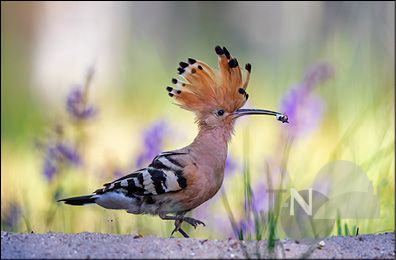
Bird of the Year – Hoopoe
Probably the best-known choice of an animal representative is the annual election of a „Bird of the Year“ by NABU (Naturschutzbund Deutschland e.V. (nature conservation society Germany)). The association was founded in 1899 by a private person in Stuttgart and enjoys a great reputation among the population through its local associations. Since 1971, NABU and LBV (Landesbund für Vogelschutz in Bayern (bird protection society Bavaria)) have jointly chosen the Bird of the Year, and now the whole of Germany votes in a public election on the respective annual bird. The successful and much-noticed action has found numerous imitators from the tree to the cave animal of the year.
The hoopoe has won the race for 2022 with almost 32% of the votes cast and can now proudly bear the title „Bird of the Year 2022“. With its orange-red plumage and distinctive feather cap, the hoopoe is certainly one of the most striking native bird species. In addition to its spectacular appearance, the election slogan „Poison is no solution“ associated with it certainly contributed to its successful election. The hoopoe lives in semi-open to open and insect-rich landscapes, which can only exist without the widespread use of pesticides. In Hesse, it is not widespread, individual specimens have been sighted south of the Main river. It breeds in tree hollows or in root or earth cavities. The NABU is optimistic that the choice of Bird of the Year will support conservation efforts and help to maintain or further increase its population.
Tree of the Year - European Beech
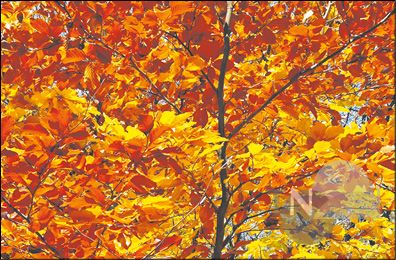
The Silvius Wodarz Foundation has been awarding the title „Tree of the Year“ since 1989, i.e. for 32 years now. The name of the tree refers to the reddish shimmer of beech wood, which clearly distinguishes the tree from other tree species. Popularly, the European or Common Beech is simply referred to as „beech“, because it is one of the most common tree species in Germany. Nationwide, it forms about 16% of the forest areas, in Hesse it is even about 35%. The tree species had developed about 6,000 years ago from a mutation of the Oriental beech in southern Europe and spread about 3,000 years ago in Germany. The use of beech wood, which is obtained in the course of forest maintenance, provides the building material for house constructions in the form of e.g. beams, boards, stairs and parquet. Beech wood is also used as raw material for the extraction of pulp, paper and viscose for the production of textiles. As early as 1990, the Wodarz Foundation had proclaimed the European beech tree of the year. The tree species, which is endowed with enormous growth power and can reach a height of up to 45 meters and a trunk diameter of 1.50 meters, had long been regarded as a beacon of hope for the climate-stable mixed forest. The fact that it is increasingly suffering from the climate-related drought was the decisive factor for the foundation to bring the beech back into the public eye.
Dragonfly of the Year
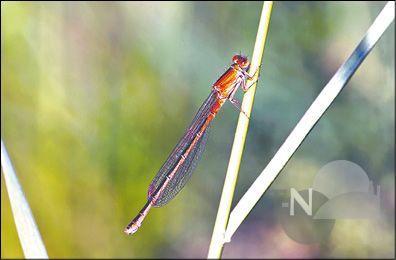
Together with the BUND (Bund für Umwelt und Naturschutz Deutschland (Society for environment and nature conservation Germany)), the Society of German-speaking Odonatologists (GdO) named the little pitch dragonfly the dragonfly of the year. Thus, a dragonfly species has won the race, which is represented everywhere, but nowhere really common. It depends on changing habitats, such as those found in near-natural floodplains. As a result of climate change, more and more smaller bodies of water are drying up, destroying important habitats. „The Little Pitch Dragonfly shows us the crisis again and again,“ BUND and GdO explained their decision. In Hesse, sightings are declining sharply and the species has been acutely threatened with extinction for years. During its lifetime, the Little Pitch Dragonfly changes its color several times and thus „communicates“ with others due to its very pronounced color vision (as, for example, willingness to mate). The promotion of sustainable-dynamic processes in the landscape (like the care of important wetlands) is considered an important conservation approach for this endangered species.
Mushroom of the Year – Fly agaric
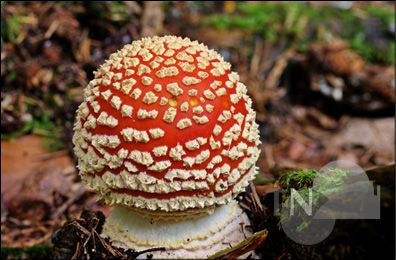
Who doesn‘t know it – the mushroom with the bright red hat and the white dots on it! Since 1994, the German Society of Mycology has chosen the „Mushroom of the Year“ every year. The fly agaric, which is distributed almost worldwide, is one of the most common mushroom species in Germany. It is considered a symbol of luck, is the subject of numerous myths and iconic actions and is probably the best-known poisonous mushroom ever. Due to its striking shape, size and color, it is also guaranteed a place in the ranks of the „most beautiful mushrooms in the world“. The up to 20 cm tall fly agaric has a white stem with hanging cuff and a striking red hat with white „envelope remains“. The lamellar fungus is related to the tuber leaf fungus, but contrary to current opinion not deadly poisonous. However, its consumption can trigger a racing pulse, convulsions and disorders of the central nervous system.
In some cultures, the fly agaric was and is used as an intoxicant. Since about 1900, the fly agaric has increasingly appeared as a lucky mushroom, or in the form of „kitsch“ in countless variants. For nature, it is a true „lucky mushroom“, as it connects trees via their roots and provides them with water and nutrients as a symbiosis partner via the tree roots. In return, the fungus receives sugar compounds from the trees that it cannot produce itself. The „barter trade“ takes place via the root tips, which are protectively coated by the fungal threads.
Fly agaric
Photo: DGFM
Little Pitch Dragonfly
Photo: BUND
Hoopoe
Photo: NABU
European Beech
Photo: Pixabay